

We live in an age of extraordinary access to information. Within seconds, we can find a fact, an opinion, a photograph, a video, a statistic, an expert—or another expert who disagrees with the first one. And yet, with all this information available to us, are we necessarily becoming better acquainted with Truth?
Yoga Science asks us to consider that question very carefully.
Thousands of years ago, the sages gave us Satya—Truthfulness—as one of the five Yamas, the great restraints that help govern our relationships with ourselves and with the world.
At first, Satya can sound quite simple: Do not lie. Tell the truth.
But Satya asks much more of us than conventional honesty. It asks us to examine not only whether something is factually accurate, but also what allegiance our thought, word or deed is serving.
And that distinction has never been more important.
When a Fact Is Not the Whole Truth
Yoga Science teaches that Satya must always be understood in relationship with the first Yama: Ahimsa—non-injury, non-harming. This means that something may be factually accurate and still fail the test of Satya.
A fact can be selected to deceive. A fact can be stripped of context. A fact can be exaggerated. A fact can be repeated with the intention of humiliating someone. A fact can be weaponized to increase fear, anger or hatred. A fact can even become a convenient servant of an attachment I already possess.
So before I say, repeat, post, forward or act upon something, Yoga Science invites me to ask more than: Is this factually correct? I can also ask: What will this thought, word or deed serve? That is a much more demanding experiment.
The Seduction of Certainty
Most of us prefer certainty to uncertainty. Certainty feels solid. I know what happened. I know what that person is like. I know who is right. I know who is wrong.
And when other people agree with us, certainty can become even more seductive. But certainty is not the same as Truth. A belief repeated often enough can become familiar.
And a familiar thought very easily develops into a deeply engrained habit known as samskara. And, by its very nature, a samskara is so comfortable that we stop examining it.
Then something very subtle happens. Instead of asking whether my belief serves Truth, I begin asking Truth to serve my belief. I look for evidence that confirms what I already think. I dismiss what makes me uncomfortable. I become more interested in winning an argument than understanding another human being. And gradually, without intending it, I may exchange Satya for certainty.
“I Could Be Wrong”
For a Yoga Scientist, perhaps one of the most liberating sentences in the English language is: “I could be wrong.”
That statement is not weakness. It is not indecision. It is not an abandonment of principle. It is an expression of vairagya—non-attachment.
For one brief moment, I loosen my grip on my opinion sufficiently to see what else might be revealed.
I become the Witness. I listen. I investigate. I discriminate. I become willing to discover that part of what I believe may be accurate, part may be incomplete, and part may simply reflect my own conditioning.
This does not mean that Truth does not exist. Quite the opposite. It means that I value Truth so highly that I am willing to sacrifice my attachment to being right—in order to serve it.
Satya Requires Courage
Sometimes Satya confirms what we already believe. Sometimes it does not. That is where courage enters the practice.
Can I acknowledge a fact that challenges my preferred narrative? Can I listen to someone with whom I strongly disagree without immediately preparing my rebuttal? Can I recognize exaggeration when it comes from someone I admire? Can I refuse to repeat something merely because it supports my position? Can I admit that I do not know? Can I change my mind when clearer evidence and the Conscience require it?
And perhaps most difficult: Can I apply the same standard of Truthfulness to those I favor––that I apply to those I oppose?
There is the laboratory. Satya is no longer an abstract ethical principle. It has become sadhana––an essential part of my Yoga Science practice.
Before I Speak
The practice can begin with something very ordinary. A piece of information comes to me. Perhaps it excites me because it confirms something I already believe. I immediately want to tell someone else. But before I do, I can pause.
Do I know this to be accurate? Am I exaggerating it? Am I omitting something important? Am I repeating it because it serves Truth—or because it serves my likes and dislikes? Will expressing it in this way serve Ahimsa?
And then: What does my Conscience advise me to do? Perhaps I should speak. Perhaps I should ask another question. Perhaps I should investigate further. Perhaps I should say, “I don’t know.” Perhaps I should remain silent.
Satya does not give us one predetermined answer for every circumstance. It asks us to become capable of receiving the right answer for the present circumstance.
The Ballot Box Is Also a Field of Action
According to statute, Election Day in the United States is held annually on “the Tuesday next after the first Monday in November.” That’s when Americans enter voting booths and make choices about the people they believe should serve in government.
Yoga Science does not tell us which candidate to choose. That responsibility belongs to each citizen. But Yoga Science can help us examine how we make that choice.
Before entering the voting booth, I can ask: Have I examined what I believe? Have I distinguished information from persuasion? Have I mistaken repetition for verification? Have fear, anger, loyalty or aversion prevented me from seeing something I needed to see? Have I been willing to listen? Have I been willing to question? Have I been willing to say, “I could be wrong”? And finally: Am I making this choice in service to my own certainty—or in service to Truth?
The ballot may be secret. But the inner process that produces it is part of our sadhana.
You Must Light Your Own Lamp
Yoga Science never asks us merely to believe. Not a politician. Not a commentator. Not a religious authority. Not a Yoga teacher. Not even a book on Yoga Science.
No. We are asked to experiment. Observe. Question. Discriminate. Experience. Evaluate. Again and again.
Because Truth cannot finally be borrowed from someone else’s certainty. We must become quiet enough, courageous enough and unattached enough to recognize it for ourselves. And then we must be willing to serve it—in thought, word and deed.
In a culture increasingly skilled at telling us what we should believe, Satya offers a profoundly different invitation: Do not merely believe. Learn to see clearly.
Perhaps that is one of the most important freedoms any human being can exercise.
So, as we encounter the next headline, news report, conversation, disagreement, accusation, promise—or ballot—let us pause long enough to ask a Question Worth Asking: Am I Serving Truth—or My Own Certainty?
Meet the author
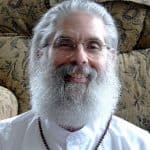
Ram Lev (Leonard Perlmutter)
Leonard is an American spiritual teacher, a direct disciple of medical pioneer Swami Rama of the Himalayas, and a living link to the world’s oldest health and wisdom spiritual tradition. A noted educator, philosopher and Yoga Scientist, Leonard is the founder of the American Meditation Institute, developer the AMI Foundation Course curriculum, and originator of National Conscience Month. He is the author of the award-winning books The Heart and Science of Yoga and YOUR CONSCIENCE, and the Mind/Body/Spirit Journal, Transformation. A rare and gifted teacher, Leonard’s writings and classes are enlivened by his inspiring enthusiasm, vast experience, wisdom, humor and a clear, practical teaching style. Leonard has presented courses at the M.D. Anderson Cancer Center, numerous medical colleges, Kaiser Permanente, the Commonwealth Club of California, the U. S. Military Academy at West Point and The New York Times Yoga Forum with Dean Ornish MD.