

There are times when another person’s words or actions disturb us. Someone disappoints us. Someone behaves in a way we believe is inconsiderate or unfair. A relationship does not unfold as we expected. A circumstance interferes with our plans. Suddenly irritation, anger, resentment, fear or disappointment appears in the mind.
Our attention naturally turns outward. Why did this happen? Why did that person behave this way? Why can’t things be different?
But for the student of Yoga Science, there is another Question Worth Asking: What am I being asked to learn?
Any Negativity Is in Your Mind
While Jenness and I were studying with Swami Rama of the Himalayas in the 1990s, we attended one of his lectures, during which we were quite shocked to hear him say, “98% of the people are blind.” We immediately considered his statement to be in direct conflict with the highest principle of Yoga Science: an overt abscence of ahimsa (non-injury, non-harming).
Following that uncomfortable experience, we sat down at home and wrote a carefully considered letter to our teacher questioning what we perceived to be his negation of ahimsa.
Two weeks later we received his remarkably brief response. The entire note read: “Any negativity is in your mind.”
Although Swami Rama’s curt response ruffled our egos, it also made us smile. We were being asked to solve the puzzle for ourselves by initiating a new laboratory experiment to discover what faulty concepts were inhibiting our own abilities to see clearly.
Our working hypothesis was simple: Our minds were the problem, and our minds were the solution.
The inquiry was thorough: Which faulty preconception was in play? What attachment had been disturbed? What expectation had not been fulfilled? What unexamined judgment had been awakened? What samskara was demanding satisfaction? What priority had we established that was preventing us from seeing clearly?
The experiment took us close to two years to resolve.
Eventually, we began to understand that the blindness Swami Rama spoke of was not simply something to identify in other people. Our own preconceptions, attachments and samskaras could often prevent us from seeing clearly what was directly before us.
And by the conclusion of our experiment, Jenness and I had to admit that, if anything, Swami Rama’s statement that “98% of the people are blind” might well have been conservative.
The Teacher Has Arrived
In our previous Question Worth Asking, What If Everyone Is My Teacher?, we considered an ancient principle of Yoga Science: every relationship can become an opportunity to learn.
But recognizing the teacher is only the beginning. Sometimes the lesson the teacher brings is one we would rather not receive.
It is much easier to recognize another person’s impatience than our own attachment. It is easier to identify another person’s shortcomings than to examine the expectation within ourselves that has been violated. And it is often easier to decide what someone else ought to change than to ask what needs to be transformed within our own mind.
Yet that is precisely where the practice of Yoga Science begins. The teacher may appear outside us so that something inside us can be seen.
Enter the Laboratory
This is why at AMI we say: Life becomes the laboratory. When a disturbing thought, emotion or relationship appears, the Yoga Scientist need not immediately condemn it, suppress it, justify it or act upon it.
We can first observe. What is happening in my mind? Without judgment, what am I actually experiencing? Can I witness the anger without becoming the anger? Can I witness the fear without becoming the fear? Can I recognize the attachment without automatically obeying it?
This little space between the Witness and what is witnessed gives us an opportunity to practice vairagya—detachment or non-attachment. And within that space, the scientific experiment can begin. Observe. Experiment. Experience. Evaluate.
The objective is not to prove ourselves right. It is to see clearly.
Contemplation
But clear vision does not always come immediately. Sometimes the most truthful answer to What am I being asked to learn? is simply: I don’t know yet.
There is no failure in that admission. A good scientist does not alter the data merely to arrive at a preferred conclusion. Neither does the Yoga Scientist. We contemplate. We continue to witness. We consult the Conscience. We allow the mind to become quiet enough that the loud voices of the Ego, Senses and Unconscious Mind no longer determine the conclusion before the investigation has even begun.
Eventually, through earnest contemplation, and Grace, we may begin to recognize the inner conflict. Perhaps an attachment is serving the preya rather than the shreya. Perhaps a familiar samskara is once again asking to be fed. Perhaps we have confused something we want with something we genuinely need. And with that recognition comes responsibility––the ability to respond skillfully.
“I Shall NOT Repeat!”
Yoga Science offers a powerful word for what can come next: repentance. Today that word can easily be associated with guilt, shame or self-condemnation. But that is not the true meaning of the word. Repentance actually means: “I shall NOT repeat!”
I have seen the conflict. I recognize what this habit of mind has been creating. I no longer wish to continue feeding it.
Repentance therefore is not punishment for the past. It is a commitment concerning the future. But recognizing what should not be repeated is still not sufficient.
The samskara may be strong. The attachment may be familiar. The personality may still prefer the preya.
We need help. And so we pray.
What Kind of Prayer?
There are two very different ways to pray. The first might be called Ego-Centered Prayer. It is the prayer of the beggar: Give me this. Give me that. Make this person change. Take this difficulty away. Give me the outcome I prefer.
The center of such prayer remains I, me and mine. But the Yoga Scientist is invited to discover another form of prayer. God-Centered Prayer.
Having contemplated the conflict and begun to see clearly what within the mind is obstructing the shreya, we no longer pray that the world accommodate our ignorance.
Instead, we pray for the strength to sacrifice that ignorance back to its Source. That is a very different prayer. We are not asking the Divine to satisfy the personality. We are asking for the strength to transform it.
What Does It Mean to Sacrifice?
Today the word sacrifice commonly suggests giving up something the personality would prefer to keep. And sometimes sacrifice certainly feels that way. But hidden within the word is another understanding.
Sacrifice comes through Latin from words associated with sacred and making or doing. To sacrifice is, at its root, to make sacred.
What an extraordinary description of the work of Yoga Science. When anger, fear, resentment, desire or attachment arises, energy has become associated with a particular thought, emotion or samskara.
Yoga does not ask us to hate that energy. Energy itself is neither the problem nor the enemy. The question is: What is this energy serving? If it is serving ignorance, attachment and the preya, clear vision presents us with an opportunity.
“Through repentance, God-Centered Prayer, sankalpa and willpower, that energy can be redirected.” We are not sacrificing the energy. We are sacrificing that energy’s allegiance to ignorance.
What had been serving fear can now serve courage. What had been serving resentment can now serve understanding. What had been serving attachment can now serve freedom. What had been serving the preya can now become sacred in service to the benevolent highest good of shreya.
Therefore, sacrifice is the mechanism of transformation.
The Prayer and the Sacrifice
But prayer does not relieve us of responsibility. God-Centered Prayer does not ask the Divine to make the sacrifice for us. We pray for the strength. Then we must exercise the willpower. This is where sankalpa—our solemn resolve—becomes essential.
Clear vision has shown us what is to be done and what is not to be done. Repentance has declared: “I shall NOT repeat!” Prayer has turned us toward the Source. Sankalpa establishes our intention. And willpower enables us to make the sacrifice in thought, word and deed.
Through this process, the inner instrument is gradually purified. Not all at once. Not because we have become perfect. But because, one relationship and one choice at a time, we are learning to dedicate more of our energy in service to Inner Wisdom.
What Am I Being Asked to Learn?
The next time another person or circumstance disturbs the mind, notice where your attention first goes.
The personality may immediately begin constructing its case. Look what this person did. Look what happened to me. This should not be happening.
Perhaps all the external facts are exactly as you perceive them. But even then, Swami Rama’s uncompromising instruction remains available: “Any negativity is in your mind.”
The outer circumstance may need to be addressed. A boundary may need to be established. Something may need to be said. Something may need to be done. Or perhaps nothing needs to be done outwardly at all.
That determination belongs to the Conscience. But before acting, there is another possibility.
Pause. Witness. Contemplate. And ask: What am I being asked to learn?
Then be willing to receive the answer—even when the answer reveals something within yourself that you would rather not see. And if clear vision comes, another Question Worth Asking may quietly follow: What am I willing to sacrifice in order to live what I have learned?
The teacher can reveal the lesson. But the student must do the sadhana––the practice of Yoga Science. And through the sacred act of sacrifice, what once served the preya can be transformed into that which serves the shreya.
The teacher has arrived. Is the student ready to receive the lesson and respond?
Meet the author
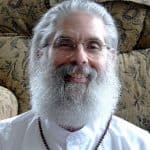
Ram Lev (Leonard Perlmutter)
Leonard is an American spiritual teacher, a direct disciple of medical pioneer Swami Rama of the Himalayas, and a living link to the world’s oldest health and wisdom spiritual tradition. A noted educator, philosopher and Yoga Scientist, Leonard is the founder of the American Meditation Institute, developer the AMI Foundation Course curriculum, and originator of National Conscience Month. He is the author of the award-winning books The Heart and Science of Yoga and YOUR CONSCIENCE, and the Mind/Body/Spirit Journal, Transformation. A rare and gifted teacher, Leonard’s writings and classes are enlivened by his inspiring enthusiasm, vast experience, wisdom, humor and a clear, practical teaching style. Leonard has presented courses at the M.D. Anderson Cancer Center, numerous medical colleges, Kaiser Permanente, the Commonwealth Club of California, the U. S. Military Academy at West Point and The New York Times Yoga Forum with Dean Ornish MD.