 A decade ago, Deepak Chopra, M.D., wrote Perfect Health, the first practical guide to harnessing the healing power of the mind, which became a national bestseller. The book described how breakthroughs in physics and medicine were underscoring the validity of a 5,000-year-old medical system from ancient India known as Ayurveda ("the knowledge of life span" in Sanskrit). Perfect Health went on to describe how to apply the ancient wisdom of Ayurveda to everyday life. In celebration of this classic work we have created this new edition, revised and updated to include the latest medical research. Although we experience our bodies as solid, they are in fact more like fires that are constantly being consumed and renewed. We grow new stomach linings every five days, for instance. Our skin is new every five weeks. Each year, fully 98 percent of the total number of atoms in our bodies is replaced. Ayurveda gives us the tools to intervene at this quantum level, where we are being created anew each day. Ayurveda tells us that freedom from sickness depends on contacting our own awareness, bringing it into balance, and then extending that balance to the body. Perfect Health provides a complete step-by-step program of mind body medicine tailored to individual needs. A quiz identifies the reader's mind body type: thin, restless Vata; enterprising, efficient Pitta; tranquil, steady Kapha; or any combination of these three. This body type becomes the basis for a specific Ayurvedic program of diet, stress reduction, neuromuscular integration, exercise, and daily routines. The result is a total plan, tailor-made for each individual, to reestablish the body's essential balance with nature; to strengthen the mind body connection; and to use the power of quantum healing to transcend the ordinary limitations of disease and aging--in short, for achieving Perfect Health.
 In classic of patient empowerment, Peace, Love & Healing offered the revolutionary message that we have an innate ability to heal ourselves. Now proven by numerous scientific studies, the connection between our minds and our bodies has been increasingly accepted as fact throughout the mainstream medical community. In a new introduction, Dr. Bernie Siegel highlights current research on the relationships among consciousness, psychosocial factors, attitude and immune function.
 The Rig Veda is not only one of the oldest sacred scriptures of the world, but also one of the most misunderstood. Past scholarship has dismissed the hymns of the Rig Veda as being expressions of a primitive animistic mentality that only rarely rose to true spiritual and philosophical heights. David Frawley's book demonstrates that this judgmental view is ill-founded. His fine renderings of select Vedic hymns bear witness to the fact that their composers were sages and seers--powerful poets who knew the art of symbolic and metaphoric communication. The Vedic hymns give us a unique glimpse not into a primitive mentality but a mentality and culture that revolved around the highest spirtual values and visions. This is an important and riveting book, ushering in a new and sounder tradition of Vedic interpretation and scholarship.
 Tantric Yoga and the Wisdom Goddesses is an excellent introduction to the essence of Hindu Tantrism. The author discusses all the major concepts and offers valuable corrections for many existing misconceptions. He also introduces the reader to the core Tantric practices of meditation and mantra recitation, focusing on the ten Wisdom Goddesses" states Georg Feuerstein.
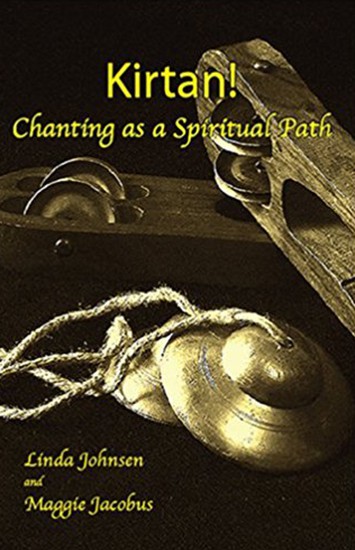 Kirtan has recently arrived in the West, carried by brilliant singers and musicians, creating a new musical movement that turned yogic chanting into a cultural phenomenon. This book interviews eight of America s top Kirtan singers, Krishna Das, Deva Premal, Bhagavan Das, Snatam Kaur, Ragani, Jai Uttal, Dave Stringer, Wah.
- Out of stock
 This book serves as an excellent guide for the serious meditator. Included are in-depth discussions of the problems and practices of meditation, proper preparations, and concrete methods for deepening meditation.
  Among the oldest of India's spiritual texts, the Upanishads are records of intensive question-and-answer sessions given by illumined sages to their students. Widely featured in philosophy courses, the Upanishads have puzzled and inspired wisdom seekers from Yeats to Schopenhauer. Eknath Easwaran makes this challenging text more accessible by selecting the passages most relevant to readers seeking timeless truths today. His best-selling, accessible, highly readable translation and lively foreword place the teachings in a contemporary context for students and general readers alike.
 As we learn to rejoice in “Lord God, thou holy lover of my soul,” we begin to glimpse the transformative power of divine love in our lives. In this anecdotal, warm, and intensely practical commentary on Thomas a Kempis’s Imitation of Christ, Easwaran examines this enduring Christian passage line by line to show us what love is and how to overcome obstacles to loving more fully.
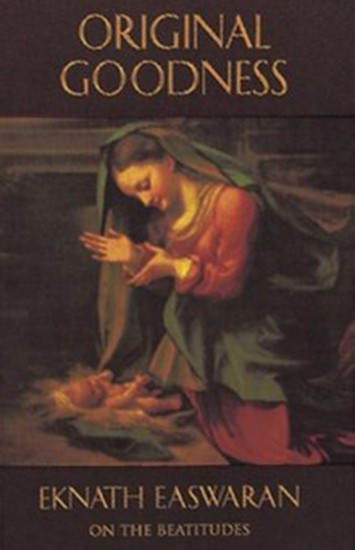 Using exhilarating quotes from numerous Christian mystics, Easwaran focuses on the idea of "original goodness," the spark of divinity that is every individual's birthright, regardless of personal assets or liabilities. The spiritual resources everyone needs love, compassion, meaning, hope, freedom from fear are already there, ready to be uncovered. Original Goodness includes instructions on how to meditate, and how to apply the power and insights of meditation to everyday life. Original Goodness is part of a three-volume series, Classics of Christian Inspiration, which collects the best writing of Eknath Easwaran on well-loved and inspiring passages and mystics in the Christian tradition.
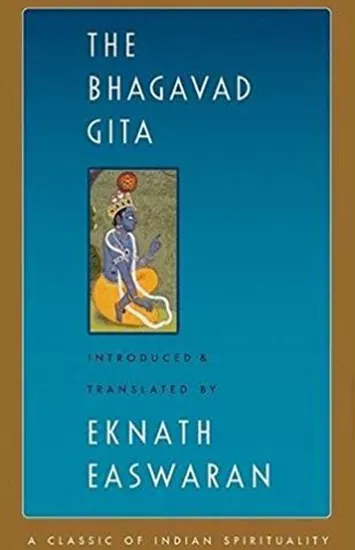 Vivid literature, lofty philosophy -- the Bhagavad Gita distills the finest in India's vast and varied culture On the morning of battle, facing Armageddon, prince Arjuna loses his nerve and refuses to fight. Krishna knows better: "Your very nature will drive you to fight. Your only choice is what to fight against." His advice gives an inspiring model of the man or woman of action -- the person who aims at goodness in a world of conflict and change. In this translation, the Gita stands out as a book of choices -- direct, practical, universal. The introduction sketches the background of the poem and gives clear, contemporary explanations of the basic ideas of Indian philosophy: karma, reincarnation, yoga, freedom. Separate chapter introductions outline the drama as it unfolds.In the Bhagavad Gita, Prince Arjuna asks direct, uncompromising questions of his spiritual guide on the eve of a great battle.In this best-selling and expanded edition of the most famous --and popular -- of Indian scriptures, Eknath Easwaran contextualizes the book culturally and historically and explains the key concepts of Hindu religious thought and the technical vocabulary of yoga. Chapter introductions, notes, and a glossary help readers understand the book's message. Most importantly, this translation uses simple, clear language to impart the poetry, universality, and timelessness of the Gita's teachings.
 Provides and in-depth analysis of Western and Eastern models of the mind and their differing perspectives.
 In Wisdom of the Ancient Sages, Swami Rama shares with the modern world the powerful and inspiring teachings of one of the worlds greatest spiritual texts: the Mundaka Upanishad. This beautiful translation and commentary affirms human nature as peaceful, creative, and transcendent. Its message will assist anyone who seeks to walk the path of personal andspiritual development.
 Describes the anatomy and physiology of breathing, as well as the subtle yogic science of prana.
 Describes the anatomy and physiology of breathing, as well as the subtle yogic science of prana.
 Swami Rama's description of the totality of the mind, the functions of the mind, and the emotions goes far beyond the concepts of modern psychology.
 This concise collection of Swami Rama's teachings serves as a practical guide for the spiritual seeker. Spiritual practice leads the seeker towards inner experiences of divinity that further one towards attaining the goal of life. Swami Rama, yogi, scientist, philosopher and humanitarian, was deeply steeped in the spiritual traditions of the Himalayan sages. He was a free thinker, guided by direct experience and inner wisdom. His teachings are universal and nonsectarian, providing a bridge between the East and the West.
 This warmly encouraging collection of daily readings offers immediate inspiration for readers seeking a more spiritually grounded lifestyle. Each reading is based on a quotation from one of the world’s great philosophers, poets, saints, and sages. Augustine and Einstein, Emily Dickinson and Jalaladdin Rumi, Biblical verses, Buddhist sutras, Hasidic proverbs, and Hindu Upanishads can all be found here. Each quote is accompanied by a commentary from Easwaran, explaining how the wisdom of the ages can help us here and now. Some days offer gentle reminders to slow down and be mindful. Other days give advice for changing an unwanted habit, mending a relationship, staying strong in hard times, or striving toward the peaks of spirituality described in all religions. This is a book to read in the morning to start the day right, or at night to prepare for peaceful rest. Each day, each year, brings fresh insights and inspiration.
 A collection of more than 50 talks on the vast range of inspiring and universal truths that have captivated millions in Paramahansa Yogananda's Autobiography of a Yogi.
 Siegel, a New Haven surgeon, believes that the power of healing stems from the human mind and will, that his scalpel only buys time against cancer, and that self love and determination are more important than choice of therapy. His philosophy has caused radical changes in his practice. Siegel recounts many arresting anecdotes: joyous stories of patients who survived against all odds, sad chronicles of those who seemingly gave up and assented to their own deaths. The author's credentials make this one of the more plausible books on the mind-body connection.
 This inspiring book will be helpful to anyone who is seeking to understand the dynamic interplay between loving relationships and the path of spirituality. In clear, candid language, Swami Rama presents his vision of the potential that marriage and family life have to help us open our heart, expand our personality, and contribute to our spiritual unfoldment.
 Rediscover the long-forgotten spiritual masters of Egypt and Europe. Johnsen, a leading author on Eastern spirituality, reveals how some of the most famous Greek thinkers – including Plato, Pythagoras, and Plutarch – understood the importance of harmony between mind and body, and practiced ancient yogic techniques, including meditation and vegetarianism. This book brings to light long-neglected historical accounts by the ancient Greeks themselves describing their pilgrimages to India and their encounters with enlightened masters of the East.
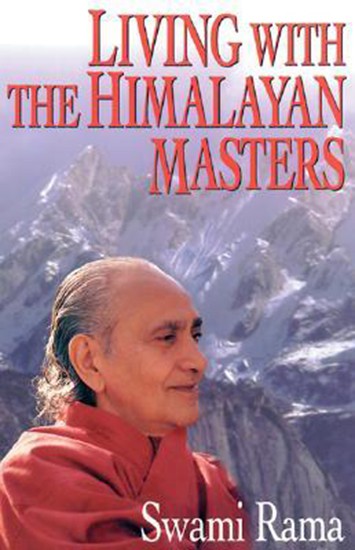 In this extraordinary account of his spiritual adventures, the author presents his encounters with Mahatma Gandhi, Sri Aurobindo, Rabindranath Tagore, a lady sage who never slept, and many other Himalayan masters. The author spent eleven months in a cave monastery and traveled to study in Tibet with his grandmaster. He author honors this spiritual teacher as a stream and a channel of wisdom. He modeled selflessness, fearlessness, faith, and determination as prerequisites for enlightenment. Swami Rama also writes about his experiences on the path of renunciation, which he calls "a razor's edge." He ponders the rich meanings of humility, conquering fear, trusting in divine protection, developing the powers of the mind, and casting off the body in death. One of the best examples of Swami Rama's humanity is conveyed in a brief chapter where he humorously tells of being mistaken as a ghost while meditating in a cemetery.
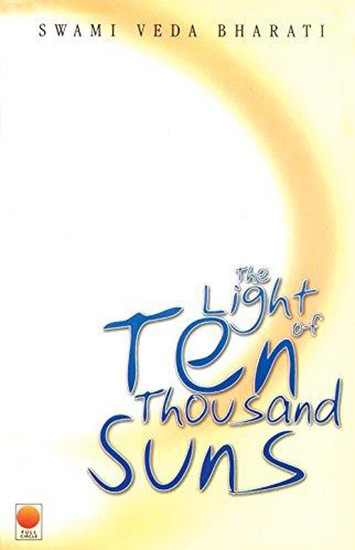 This special book is a set of inspirational teachings in poetic verse and prose of the major spiritual knowledge of the Himalayan yoga meditation tradition. "The Light of Ten Thousand Suns" is also the autobiography of Swami Veda Bharati, who allows us an intimate look into his own path of learning, teaching, and commitment to his Master.